

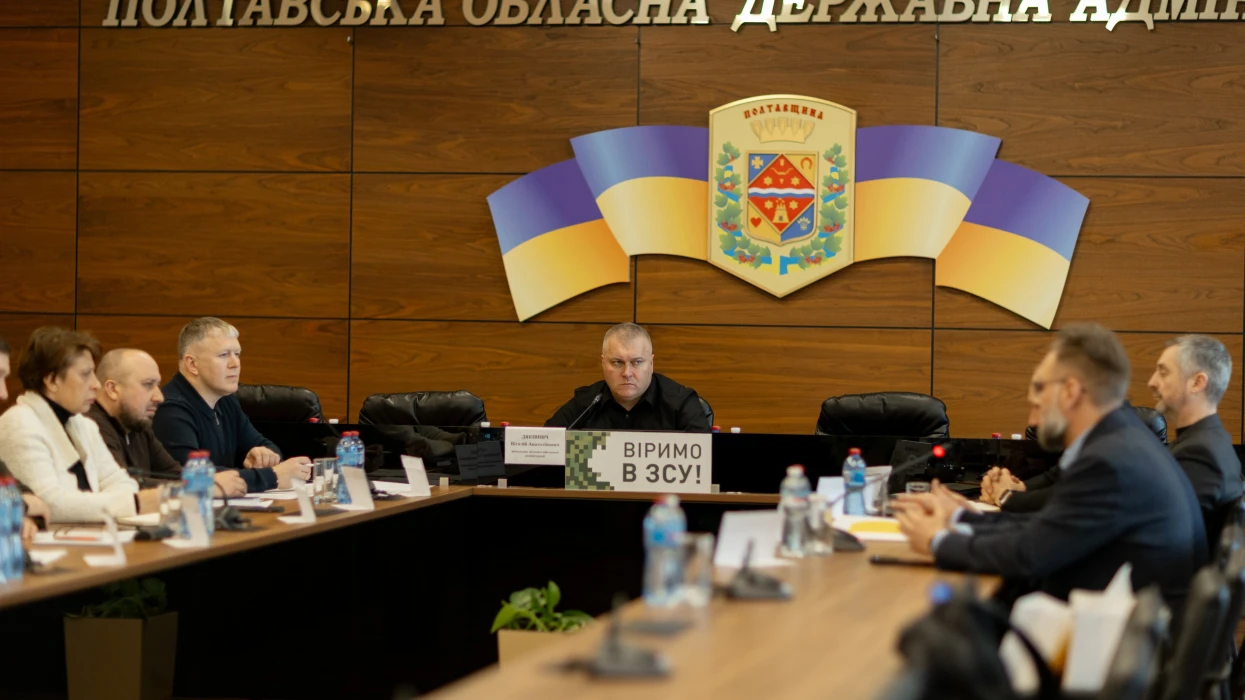
A large-scale energy project is underway in Poltava Region – DTEK Poltava WPP, which will enable the region to generate its own electricity. Vitaliy Dyakivnych, Head of Poltava Region State Administration, held a meeting about the construction of a 650 MW wind farm in one of the region's communities.
The head of the region stressed that the development of its own capacities is critically important. After all, the region does not have its own power generation and depends on the energy systems of other regions, so the development of its own generating capacities is a necessary condition for life in the current conditions.
‘The construction of about 100 wind turbines and the creation of a network of access roads are planned. The total investment is 1.2 billion euros. The project is strategic – it will form its own electricity generation for the Poltava region. Wind generation will be able to power more than a million households,’ Vitaliy Dyakivnych emphasised.
"The Poltava WPP project will kick-start the region's economic development and improve the well-being of communities. We are ready to implement such a large-scale and truly complex project. After all, our goal is to strengthen the energy security of the region and the left bank of Ukraine as a whole. I am confident that with the support of the Poltava Regional State Administration and the community, the construction of the wind farm will begin as soon as possible," said Oleg Solovey, Deputy CEO of DTEK Renewables.
The implementation of the WPP will provide the region with a number of benefits: UAH 5.3 million in taxes paid to the community budget from 2023; up to UAH 10 million in annual land rent; the creation of about 100 new jobs; a reduction in CO₂ emissions up to 2.7 million tonnes per year; and a reduction in the load on the grid during power shortages.
Preparatory stages are in the implementation process: urban planning documentation has been processed, environmental and engineering studies have been conducted, and design and work on connecting to the grid are ongoing.
However, Vitaliy Dyakivnych pointed to critical delays due to unresolved land issues: ‘Land issues are progressing slowly, with only about 30% of the total land requirement currently secured, and this is affecting the project implementation schedule. This pace is unacceptable for an infrastructure project of this level.’
Following the meeting, the head of the Regional State Administration instructed the relevant departments to provide support for the project and develop solutions to resolve land issues. Local authorities were recommended to speed up actions within their powers, and the Regional State Administration was instructed to monitor implementation.
‘The tasks have been defined. Next step – implementation,’ concluded Vitaliy Dyakivnych.